
Commercial Trailers for Rent: Dry Van vs. Flatbed vs. Reefer
Key Takeaways
- Dry van trailers are enclosed and weather-protected. They’re best suited for palletized, non-perishable freight like retail goods and electronics.
- Flatbed trailers are open platforms designed for oversized, heavy or irregularly shaped cargo such as machinery and building materials.
- Refrigerated (reefer) trailers maintain a controlled temperature for perishable foods and other temperature-sensitive cargo.
- All Penske semi-trailer commercial rental vehicles come with 24/7 roadside assistance for peace of mind.
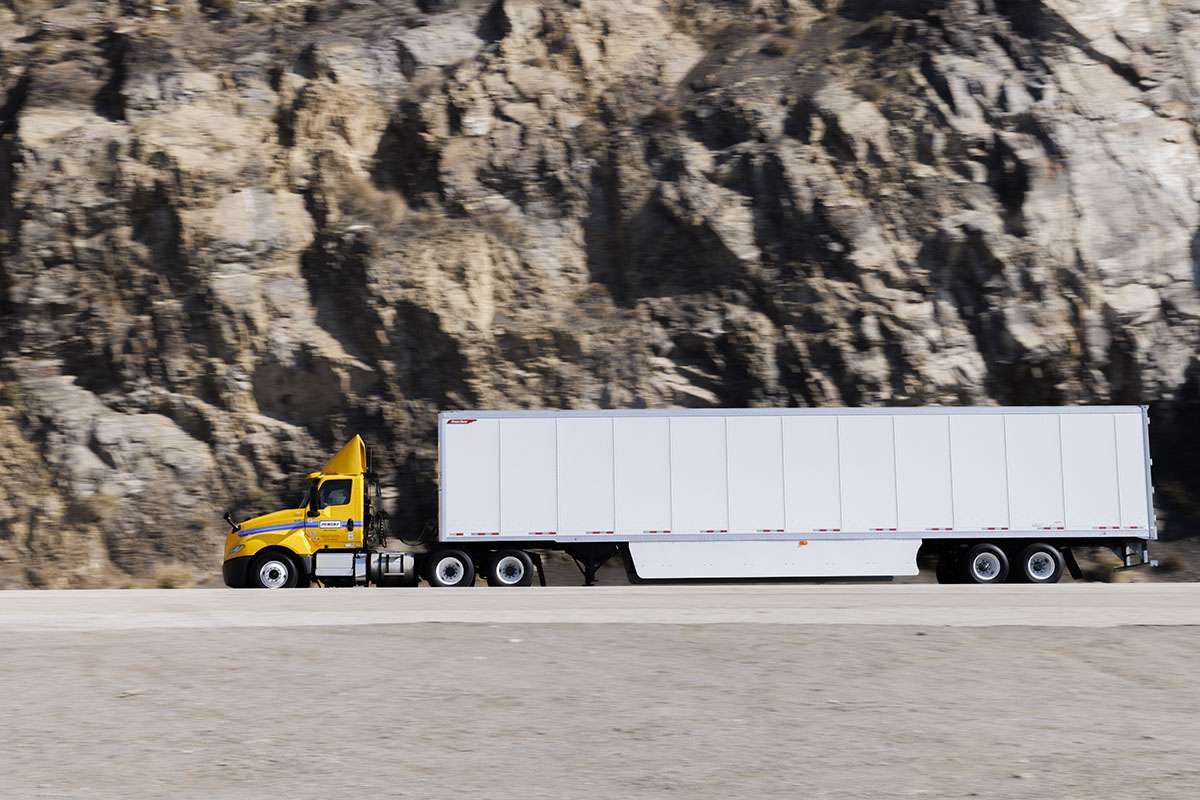
How to pick the right rental trailer for your business
Large loads come in all shapes and sizes. Some fit snugly into an enclosed trailer. Others are oversized and require open-air trailers. And some need to stay temperature-controlled across every mile.
No matter the type of large load your business needs to haul, Penske offers a semi-trailer rental that fits your needs. Let’s examine the three most common types of trailers — dry van, flatbed and reefer — and explain the pros and cons of each.
Dry Vans: The Classic Long-Haul Companion
The dry van trailer is the traditional 18-wheel setup you see rolling down the highway. Pulled by a heavy-duty tractor, a dry van is a secure, versatile, enclosed trailer used to transport general freight. It’s a smart choice for hauling non-perishable, palletized cargo, including electronics, appliances, packaged food, retail inventory, furniture, and materials for exhibits and events.
Penske offers 48 and 53 foot dry van trailer rentals. Features include:
- Rear swing or roll-up doors for easy loading, with hydraulic liftgates available on select models
- E-track and/or logistics posts to keep cargo secure on the route
- Air-ride suspension for smooth transportation
- Sliding tandem axles to distribute weight evenly
Dry van trailers are 13 ft. 6 in. high and 8 ft. 6 in. wide. Available models feature either an aluminum roof or a translucent roof for better visibility inside the trailer.
Special considerations: To use a dry van trailer, you must ensure that your cargo will fit through the door. To find out, use the inside height (110 in.) and inside width (101 in.) as your guide. Any cargo that exceeds those dimensions will need a different commercial rental trailer type.
Flatbed Trailers: When One Size Doesn’t Fit All
A flatbed trailer is the best option when cargo is too heavy, large or awkwardly shaped to fit through the door of a dry van. Because flatbeds are open trailers with no walls or roofs, you can load from the sides or rear of the trailer using forklifts or a crane, depending on the size and weight of your load.
They’re perfect for hauling steel, lumber, siding, automotive equipment, farm machinery or large entertainment equipment.
Penske offers 40 to 53 ft. flatbed trailer rentals. Features include:
- Tandem axle, slide-spring suspension to balance cargo weight and improve stability
- 10 sliding winches (5 on each side) for adjustable positioning on odd-sized loads
- Bulkhead protection to prevent forward cargo movement and protect the driver
Flatbed trailers measure 102 in. wide, with a bulkhead height of 48 in.
Special considerations: If you’re using a flatbed, be sure to check the weather. Use heavy-duty industrial tarps as needed to keep cargo dry during transport when running routes in rain, sleet or snow. Also, Federal Motor Carrier Safety Administration (FMCSA) regulations require all cargo to be secured so it can’t leak, spill, blow or fall from the flatbed. Get our best cargo securement tips.
Refrigerated Trailers: Keeping Perishables Cool in Transport
Refrigerated trailers, also called reefer trailers, are enclosed trailers outfitted with a refrigeration unit designed to keep goods within a controlled temperature range during transport. Reefer trailers are an excellent choice when hauling perishable food, fresh or frozen grocery products, certain pharmaceuticals, cold beverages, or flowers and other temperature-sensitive agricultural products.
Penske offers 53 foot refrigerated trailer rentals. Features include:
- Single-temperature, electric standby and low-hours options to control the interior climate, save on fuel, and reduce wear and tear
- Rear swing or roll-up doors for convenient cargo access, with hydraulic liftgates available on select models
- Duct floor to enhance airflow and circulation
Refrigerated trailers are 13 ft. 6 in. high and 8 ft. 6 in. wide. The inside height for loading is 103 in., and the inside width is 96 in.
Special considerations: While reefer trailers maintain the temperature of properly prepared cargo, companies are responsible for bringing their products to the correct temperature before loading. Precooling may be required, especially for food and beverage transport per FDA Food Safety Modernization Act guidelines.
The Final Rundown: Dry Van vs. Flatbed vs. Reefer Trailers
Pressed for time? Use this quick reference guide to choose the right semi-trailer rental for your business.
| Semi-Trailer Type | Best Suited For | Primary Advantages | Top Consideration |
|---|---|---|---|
| Dry van | Palletized, packaged or boxed freight | Protection from weather; easy dock loading and unloading | Cargo must fit through rear door within the enclosed trailer |
| Flatbed | Large equipment, machinery, building materials and oddly shaped cargo | Can be loaded from either side or the rear | Cargo is exposed and requires proper securement plus tarping in bad weather |
| Refrigerated trailer | Temperature-sensitive goods, including food, beverages and some pharmaceuticals | Maintains a controlled environment during transport | Requires the correct setpoint, precooling and careful airflow management |
Do I Need a CDL if I’m Using a Dry Van, Flatbed or Refrigerated Trailer?
Yes. Penske’s line of semi-trailer commercial rental vehicles is designed to be paired with a heavy-duty tractor, such as a single-axle day cab, a tandem-axle day cab or a sleeper tractor. Heavy-duty tractor rentals require that operators carry a Commercial Driver’s License (CDL).
However, Penske also offers medium-duty, non-CDL box trucks, refrigerated trucks and flatbed trucks. For more information, check out our CDL vs. Non-CDL truck rental guide.
When To Rent a Semi-Trailer for Your Business
A semi-trailer rental makes sense for companies that have short-term projects and peak season rental needs but don’t want to take on the added expense and overhead of owning and maintaining their fleet. Renting is also a smart option if your business:
- Needs a trailer for a specialized, single-use need
- Has owned equipment undergoing maintenance
- Wants to test a trailer configuration before making a long-term commitment
- Requires extra storage or staging capacity
- Is still determining its transportation needs
With Penske on Your Side, You’re Never Alone
Every Penske semi-trailer rental is backed by full-service support, expert maintenance and simple, predictable pricing, along with 24/7 roadside assistance for peace of mind.
Ready to begin? Browse our full lineup of commercial trucks and trailers today.
Common Questions
What’s the main difference between a dry van, flatbed and reefer trailer?
Dry vans are enclosed trailers built for general, non-perishable freight. Flatbeds are open platforms for oversized or oddly shaped loads. Reefers are enclosed, temperature-controlled trailers that are refrigerated and ideal for hauling perishable or temperature-sensitive cargo.
How do I know if my cargo will fit inside a dry van trailer?
Check the dimensions of your cargo against the inside measurements of the dry van trailer. Commercial dry van trailer rentals from Penske offer 110 in. of inside height and 101 in. of inside width. Cargo that exceeds those dimensions will need a flatbed instead.
How do I protect my cargo from the weather on a flatbed trailer?
Heavy-duty tarps are recommended to keep rain, snow or sleet from damaging equipment during transport. Companies renting flatbed trailers should also make sure their cargo is secured to meet FMSCA regulations.