How To Properly Lift Boxes and Secure Loads Safely
Inspectors found more than 1,700 cargo securement out-of-service violations in North America during the Commercial Vehicle Safety Alliance’s 2026 International Roadcheck earlier this year. Most of them could’ve been prevented with a few simple checks.
Four ways to prevent injuries and reduce risk
By following the proper procedures to lift, load and secure freight, you can prevent injuries and reduce your risk of accidents caused by shifting cargo. Keep these four tips in mind on every trip.
Use Safe Lifting Techniques
Stand close to the object and spread your feet about shoulder width apart for balance and a stable base. Squat by bending at the hips and knees and hold the item close to your body to reduce back strain. Keep your back straight, stand up using your legs and avoid twisting while walking. Use a hand truck or cart for heavy or bulky items. Keep the path to and from the truck clear of obstacles or debris.
Secure Your Cargo Before You Go
Use tie-downs to anchor cargo so it can’t move forward, backward, or sideways. FMCSA regulations require all tiedowns to be attached and secured so they can’t become loose, unfasten, open or release while the vehicle is in transit. Use edge protection whenever a tiedown may be subject to abrasion or cutting where it touches cargo.
Check that weight is evenly distributed and that the vehicle isn’t overloaded. Make sure cargo doors are closed and secure. If anything looks unsafe, report it and address the issue before leaving.
Check Your Load on Your Route
Federal rules require drivers to inspect cargo and the devices used to secure it within the first 50 miles of each trip. Recheck cargo after 3 hours of driving or 150 miles (whichever comes first) and at every change of duty status. The only exceptions are for sealed trailers that drivers have been told not to open, or loads that can’t practically be inspected.
Also, walk around the vehicle every time it’s parked. If you find loose or damaged cargo, address the problem before continuing your trip.
Unload With Care
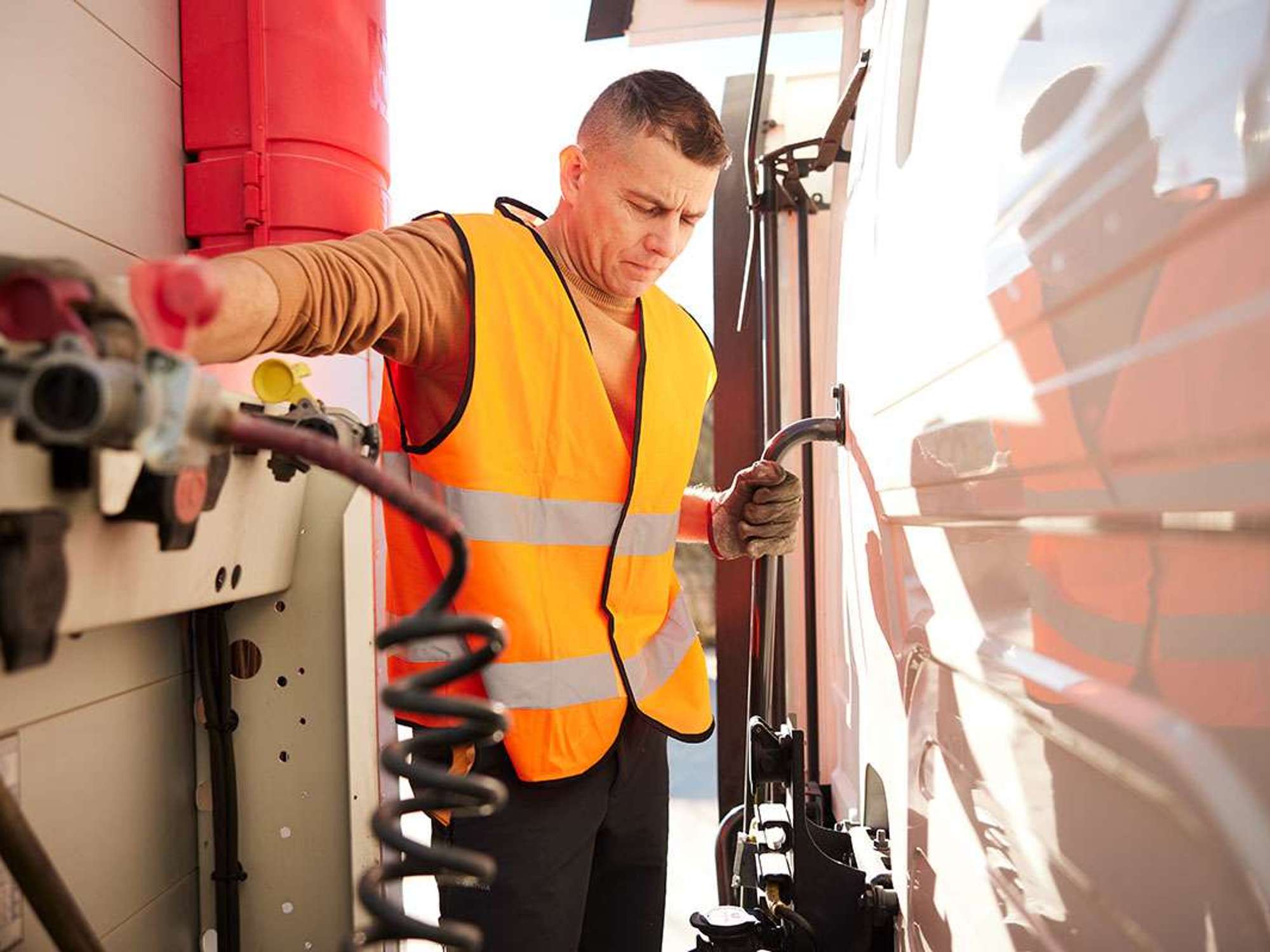
When you arrive at your destination, check for signs that cargo has shifted. Stand behind the left rear door and feel the right door for pressure. If there is none, open the right door slightly and check again before opening it fully. If cargo has shifted, close the door and get help. Stay out of the path of any cargo that can fall. If a box falls out, don’t try to catch it. Use proper equipment when unloading heavy or bulky items.