
Cargo Van vs. Box Truck vs. Straight Truck: A Truck Rental Comparison
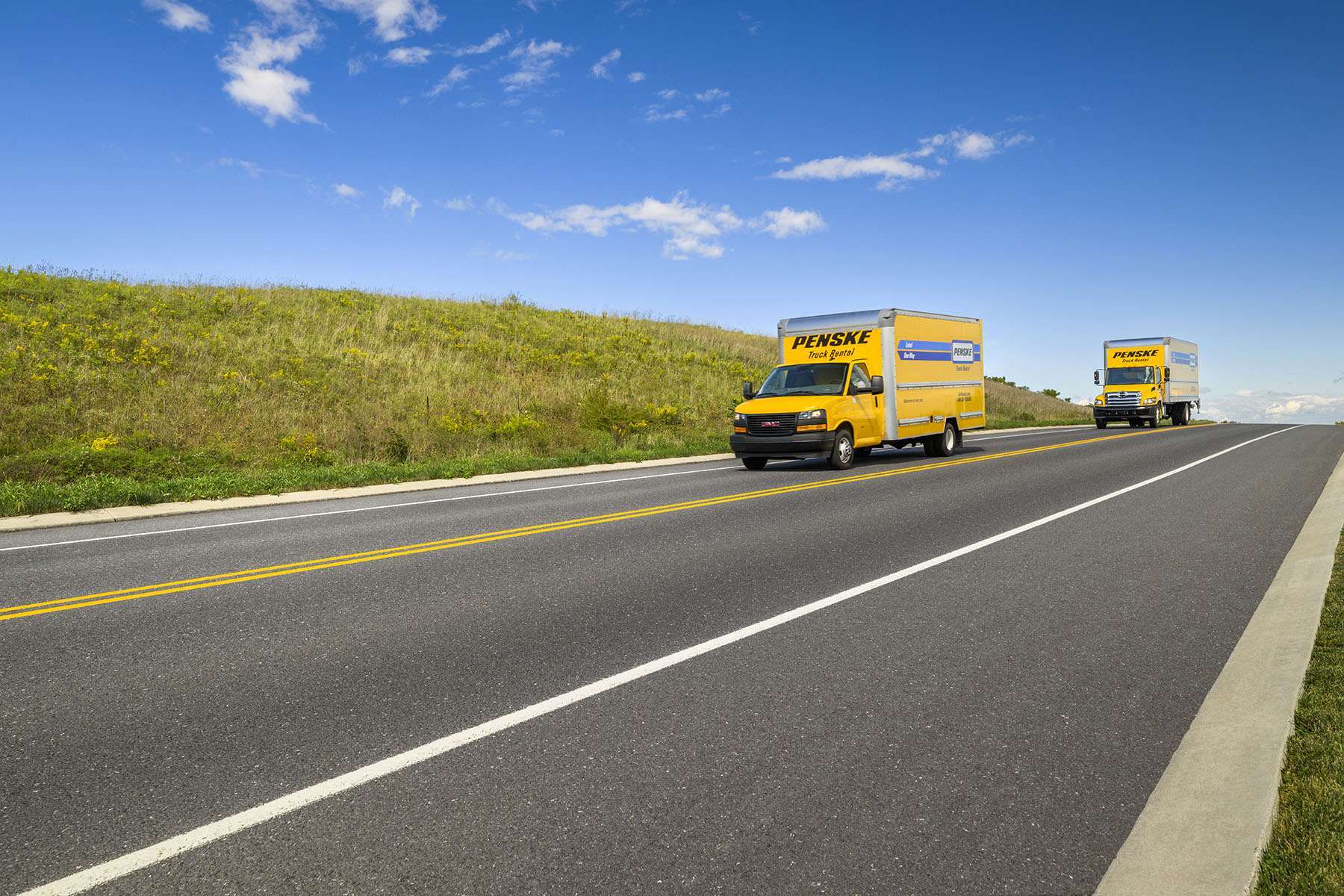
Your business depends on making prompt deliveries. The question is, which rental truck will help you get the job done: a cargo van, a box truck or a straight truck?
While their names are sometimes used interchangeably, each type of truck does a different job. Let’s break down each one so you can make the smartest choice for your business.
What’s the main difference between a cargo van, box truck and straight truck?
The key differences lie in the amount of freight they carry (called payload capacity), the type of access you need to load that freight, and the types of driver’s licenses they might require.
The Cargo Van: A Last Mile Specialist
If your delivery routes include frequent stops and crowded city streets, cargo vans are an ideal choice. At 11 ft., 11 in. long, cargo vans can fit into standard parking spaces with ease. They’re also practical and roomy, able to carry a payload between 3,200 and 3,900 pounds. Anyone with a standard driver’s license can drive one.
Businesses that rely on cargo vans include:
- Florists who make daily residential and commercial deliveries
- Couriers who make multiple runs between healthcare facilities and laboratories
- Linen supply companies that keep hotels and hospitals stocked with fresh sheets
All cargo vans are designed so delivery drivers can load and unload freight easily. But not all of them are alike.
Penske offers several models, including the high-roof cargo van (81 in. high, compared with the standard 52-to-56-inch height) that eases back strain when loading and unloading cargo, and the delivery van with shelves for organized package delivery.
Need an eco-friendly option? You can meet your company’s sustainability goals with a battery-powered electric cargo van.
The Box Truck: A Versatile Workhorse
A light-duty box truck is perfect for businesses that have outgrown their cargo van but aren’t ready for a medium-duty truck. Box trucks let you stack freight higher than in a cargo van. They’re more fuel efficient than larger models, too.
Light-duty box trucks can carry a payload of 3,100 to 7,200 pounds, depending on the size and type you choose. And you don’t need a commercial driver’s license (CDL) to drive one.
Companies that rely on box trucks include:
- Event planning companies delivering large items to wedding and conference venues
- Local furniture stores making home deliveries of couches, mattresses and chairs
- Boutique retailers that need versatile vehicles to meet seasonal surges
A 12 foot box truck is low enough to the ground for easy loading, while a 16 foot box truck comes equipped with a 1,000-pound-capacity pull-out ramp.
Larger 16 foot and 18 foot cabover trucks include a hydraulic lift gate capable of supporting up to 2,500 lbs. Another popular box truck is the 16 foot delivery truck with shelves, which includes a side door for easy access to cargo.
The Straight Truck: An Industrial Heavyweight
When you rent a medium-duty straight truck, you get a dependable box truck capable of carrying cargo that’s loaded on pallets. Medium-duty trucks provide plenty of payload space, letting you carry up to 17,000 lbs. of freight.
Businesses that use straight trucks on a daily basis include:
- Food and beverage manufacturers delivering products to retail stores
- Nurseries meeting increased seasonal demand for bagged mulch and fertilizer
- Logistics companies handling short-term contracts
Depending on the type of straight truck you rent, you may need a CDL. Non-CDL options include 22 to 26 foot box trucks with a gross vehicle weight rating (GVWR) up to 26,000 lbs. CDL options include heavier 22 to 26 foot box trucks with a GVWR up to 33,000 lbs.
Step Van or Straight Truck? Which is a Better Medium-Duty Option?
While they look different than traditional straight trucks, 18 to 22 foot step vans, also called “bread trucks,” are classified as medium-duty vehicles. They come equipped with shelves and a walk-in cargo area, allowing the driver to step from the front seat to the back of the van without exiting the vehicle.
Their low ground-to-floor height allows for loading and unloading by hand. Step vans are ideal for companies making last-mile deliveries of parcels that are too large for a cargo van.
Could a combination of rental trucks work best for my business?
The type of rental vehicle you choose should match the needs of your busiest season. For many companies, that could mean choosing a variety of rental types and sizes.
A construction or trade contractor may choose:
- Cargo vans for secure transport of handheld tools and smaller materials
- Box trucks for moving drywall, tile, cabinets or fixtures between job sites
- Straight trucks to transport heavy roofing shingles, lumber bundles and concrete products
A manufacturer may use:
- Cargo vans to move small parts or components between facilities
- Box trucks to transport finished goods to regional buyers
- Straight trucks to ship products in bulk from the plant to the warehouse
A moving and storage company may consider:
- Cargo vans for studio apartment and small office moves
- Box trucks for one- or two-bedroom apartment relocations
- Straight trucks for full-house residential or large commercial moves
Concerned you’ll choose the wrong vehicle? That’s why renting is the most sensible option. You’ll get the flexibility to try different sizes and types of trucks and figure out the ones that meet your needs — all without the cost and commitment of a full-service lease or a new vehicle purchase.
Final checklist before you reserve a van, box truck or straight truck
Let your needs and cargo guide your search for the right type of rental truck. Start with this four-step checklist.
- Confirm the dimensions and weight of your cargo
- Determine whether you can load the items by hand
- Identify any parking or loading constraints on your route
- Consider whether your drivers will need any special licensing
Once you have the answers, it’s time to find a commercial rental vehicle from a company you can trust. Penske offers access to one of the best-maintained rental fleets in the nation, backed by 24/7 Roadside Assistance for added peace of mind. Browse our rentals and reserve a truck today.
Common Questions
What’s the difference between a box truck and a straight truck?
A box truck is a vehicle designed for moderate loads and easy maneuverability. Depending on the class and payload capacity of the vehicle, a box truck can be considered either light-duty (up to 14,000 GVWR) or medium-duty (14,001 to 26,000 GVWR). A straight truck is a medium-duty vehicle built to carry heavier, palletized freight. Straight trucks generally offer higher payload capacity and more cargo space than standard light-duty box trucks.
How do I know if a cargo van is large enough for my business?
If your cargo weight is under 3,500 lbs. and you can load freight by hand, a cargo van may be sufficient. It’s also a smart option if you need to make frequent stops in urban areas. If you need to transport larger or heavier items, a box truck might be a better option.
Can my business use more than one type of commercial rental truck?
Yes. Many businesses create fleets that include cargo vans for service calls, light-duty box trucks for mid-size deliveries, and straight trucks for heavier freight. Renting lets you try different truck sizes without committing to ownership or a full-service lease.